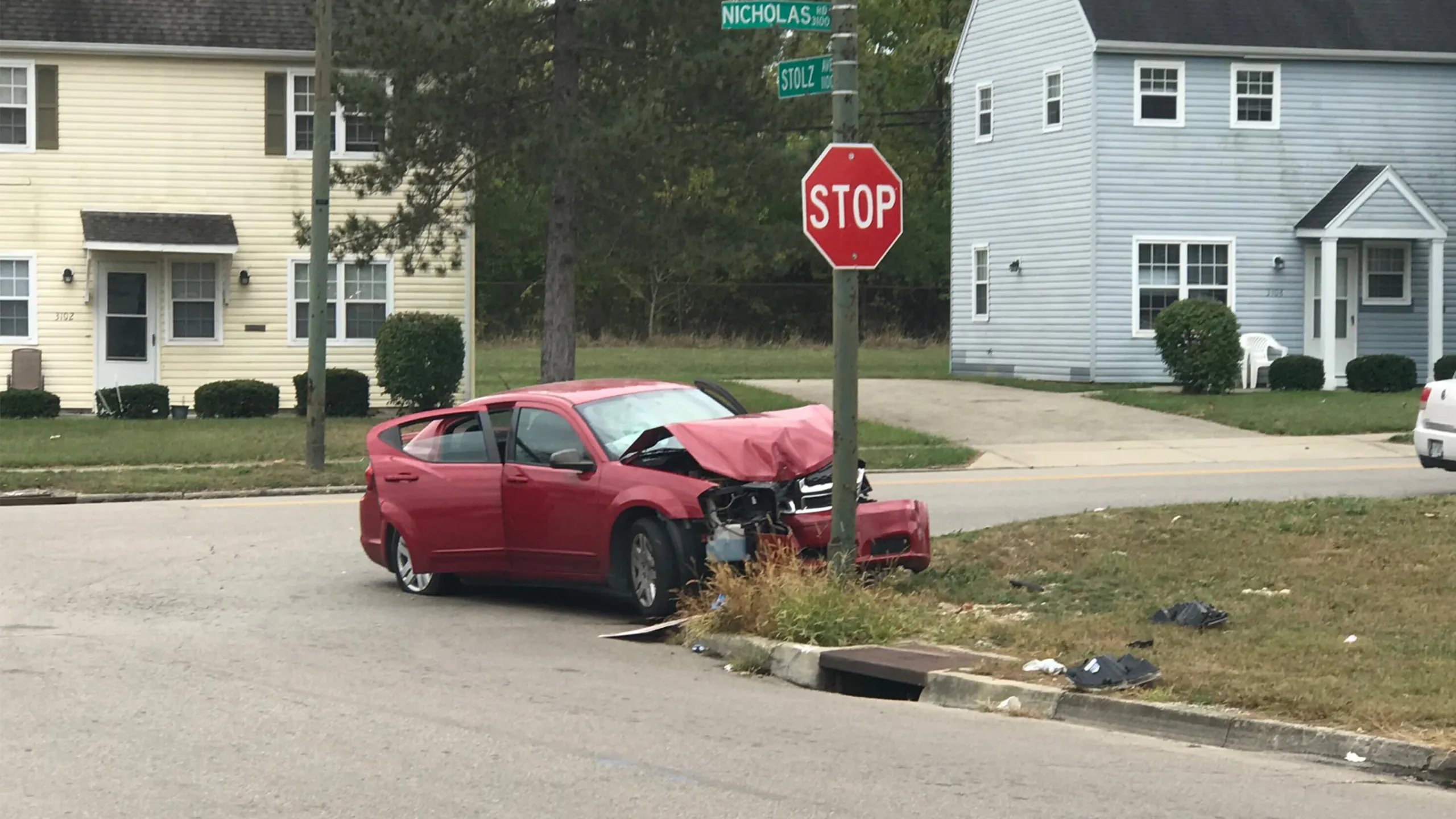
Passing the practical driving test is not just about accumulating good marks: a single serious error can be enough to fail a candidate, even if the rest of their performance was faultless. This is what is known as a "critical fault". Understanding what this notion covers, how it is assessed by the ATTT and what the most frequent errors are is essential in order to approach the driving test with complete peace of mind.
What is a critical fault?
During the practical test, whether it is the on-road driving or the manoeuvres, the examiner applies pre-established assessment criteria according to the seriousness of the errors made by the candidate. The ATTT distinguishes two categories of error: critical faults, which directly result in the candidate failing, and technical faults, which are less serious but which can also lead to a failure if they are repeated too often during the test.
In other words, a critical fault is an error serious enough, or dangerous enough, to justify on its own putting an end to a positive assessment of the candidate, whatever the quality of the rest of their driving. A technical fault, on the other hand, is tolerated on an occasional basis: it is the accumulation of such faults that becomes problematic.
How is marking carried out in the practical test?
The practical test is made up of two parts: on-road driving and the manoeuvres, carried out in a specially laid-out area closed to traffic. For categories "B" and "G", the examiner assesses the candidate using a digital tablet equipped with a dedicated application, which allows standardised marking.
In the event of a failure, the examiner justifies the decision with a comment explaining the causes of the failure and gives the candidate some advice for their next attempt.
The most frequent critical faults
While the ATTT does not publish an exhaustive and detailed list accessible to the public, the critical faults observed during driving tests correspond, as in most road assessment systems, to situations that create a real danger for the candidate, the examiner or other road users. Here are the errors most commonly identified as critical:
At junctions and regarding priority
- Refusing or forgetting to give priority to the right.
- Failing to come to a stop at a STOP sign.
- Failing to comply with a red light.
- Entering a junction and forcing another road user to brake or to take emergency avoiding action.
- Failing to give way to a pedestrian who has started to cross at a pedestrian crossing.
Regarding road signs and positioning
- Crossing a solid white line in a prolonged or dangerous manner.
- Driving the wrong way or entering a no-entry road.
- Driving in a lane or on a strip not intended for normal traffic (the hard shoulder, for example).
- Hitting the kerb or coming out of a bend dangerously.
Regarding overtaking and changes of direction
- Overtaking without having checked that another vehicle is not already overtaking.
- Changing lanes without a visual check (mirror, blind spot).
- Failing to keep a safe distance before, during or after overtaking.
Regarding vehicle control and general behaviour
- Losing control of the vehicle.
- Driving at a speed that is clearly unsuited to the traffic conditions.
- Failing to react to a foreseeable danger through a lack of anticipation.
- Making it necessary for the examiner to physically intervene on the vehicle's controls (pedals, steering wheel) to avoid an incident: in such a case, the fault is almost systematically considered to be a critical fault.
During the manoeuvres
- Mounting the kerb, particularly when reversing.
- Failing to carry out the necessary visual checks (mirrors, blind spots) during the manoeuvre.
- Endangering a road user or a pedestrian near the vehicle during the exercise.
Critical faults or technical faults: what is the difference in practice?
The distinction is fundamental to understanding your assessment sheet in the event of a failure. An isolated technical fault, a hesitant start, a forgotten indicator, a small imprecision in a manoeuvre, is generally not enough to fail a candidate. It is the repetition of this type of error, revealing an overall lack of control, that can lead the examiner to fail the candidate. Conversely, a single critical fault, even if committed at the very end of the test after an otherwise solid performance, is enough on its own to result in failure.
How to avoid critical faults on the day
- Always anticipate. The vast majority of critical faults occur at junctions: look far ahead, identify the signs, the lights and vulnerable road users before you get there.
- Never neglect your visual checks. Mirrors and blind spots must be checked before any change of direction, overtaking or manoeuvre, without exception.
- If you are in any doubt about priority, give way. It is always better to lose a few seconds than to proceed without being certain.
- Adapt your speed to the actual conditions. Slow down as you approach junctions, areas with reduced visibility and manoeuvres.
- Practise in as many realistic situations as possible before the test. The more you train in conditions close to those of the test, the more the right reflexes become automatic, including under stress.
- Stay calm after a small mistake. An isolated technical fault does not doom your test: panicking, on the contrary, may lead you to make a more serious error straight afterwards.
Avoiding eliminating faults requires above all repeated practice with a qualified driving instructor, able to identify your weak points before test day. With Drivago, easily find a reliable driving instructor, compare their availability near you and book your driving hours to work concretely on the riskiest situations: intersections, right of way, overtaking and manoeuvres.
✅Don't let a single mistake decide whether you pass: prepare for your practical test with Drivago and turn up to the test fully confident.
What is an eliminating fault?
A mistake serious or dangerous enough to directly result in the candidate failing, regardless of how good the rest of their driving was.
What is the difference between an eliminating fault and a technical fault?
An isolated technical fault (hesitant pull-away, forgotten indicator) does not generally cause the candidate to fail; it is repeating it that becomes a problem. A single eliminating fault, however, is enough to result in failure.
Which mistakes are most frequently eliminating?
Failing to give way, running a STOP sign or a red light, crossing a solid line, a dangerous overtaking manoeuvre, losing control of the vehicle, or requiring the examiner to physically intervene on the controls.
How can eliminating faults be avoided on test day?
By systematically anticipating at intersections, carrying out all visual checks, giving way whenever in doubt, adapting your speed and practising in conditions close to those of the test.