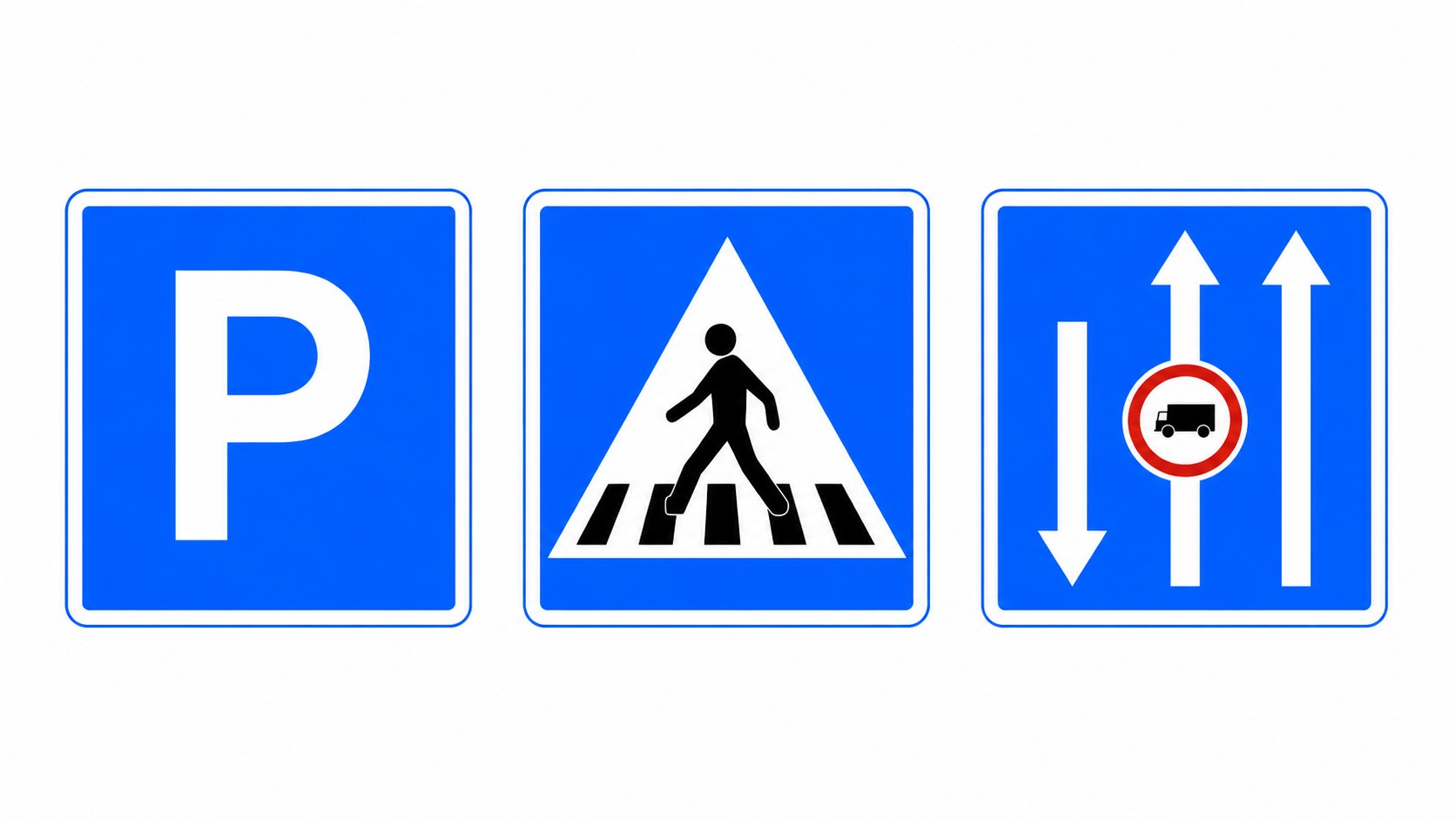
Before getting behind the wheel, every driving licence candidate in Tunisia must go through an unavoidable step: the theory examination, better known as the "code". Organised by the Agence Technique des Transports Terrestres (ATTT), this examination determines access to the practical on-road driving test and the manoeuvring test. Here is everything you need to know about how it works, the pass requirements and the best ways to prepare for it.
What is the ATTT theory examination?
The theory examination assesses the future driver's level of knowledge across several areas essential to road safety: the road rules, road safety, first aid, energy efficiency, vehicle mechanics and electrics, as well as the transport of dangerous goods. In other words, it is not just about knowing the road signs: the ATTT wants to make sure the candidate understands all the issues involved in responsible driving.
For category "A A", only the theory examination is required to obtain the licence. For all other categories, passing the driving theory test is a mandatory prerequisite before being able to register for the practical tests.
How does the test work?
The test takes place in an approved examination centre, on a multimedia computer equipped with a keyboard and a headset, in a specially arranged room. In practical terms:
- Duration: around 30 minutes.
- Language: the candidate chooses to take the test in Arabic or in French. Foreign candidates who speak neither language may be accompanied by a sworn translator.
- Question format: the candidate views photos illustrating a variety of traffic situations, with sound. Each question corresponds to a driving situation, generally with 2 to 3 answer choices.
- Scenario setting: in most cases, the candidate is deemed to be a non-trainee driver, sitting behind the wheel, driving in compliance with the traffic rules and road signs.
The number of questions and the pass threshold vary depending on the licence category applied for.
The main topics covered
The questions cover a wide range of subjects, in particular:
- road indications and signage;
- the driver and the vehicle;
- stopping and parking;
- passing oncoming vehicles and overtaking;
- priority rules;
- traffic rules;
- traffic offences;
- first aid;
- preventive maintenance and energy efficiency;
- the transport of dangerous goods by road.
Some of these topics, such as first aid or preventive maintenance, are often less revised by candidates even though they are fully part of the syllabus and can make the difference on test day.
Score and pass requirements
The pass requirement depends on the licence category being sought. For example, for category "B" (private car), you must obtain at least 24 correct answers out of 30 to pass.
|
| A1 | 25 | 20/25 |
| A | 30 | pass the category A1 test + 4/5 category A specific questions |
| B | 30 | 24/30 |
| C | 30 | 24/30 + 4/5 category C specific questions |
| C+E | 35 | Pass the category C test + 4/5 category C+E specific questions |
| D1 | 30 | 24/30 + 4/5 category D1 specific questions |
| D | 35 | pass the category D1 test + 4/5 category D specific questions |
| H | 30 | 24/30 |
Other important points to know:
- Validity of the pass: once you have passed the driving theory test, this pass remains valid for 15 months. During this period, the candidate may not sit more than 6 practical tests.
- Examination fees: registration for the theory examination costs 35 dinars (document issuance charges and registration charges), an amount that is non-refundable in the event of absence on the day of the test.
- Postponement or loss of the file: specific fees apply to postpone the test date or to obtain a duplicate of the file in the event of loss or damage.
- Appointment lead time: the test date is set by the ATTT, generally between one and two weeks after registration.
Tips for passing your theory examination
- Work on all the topics, not just road signs. Many candidates focus on signage and neglect first aid or preventive maintenance, even though these questions count just as much towards the final score.
- Practise under real conditions. Doing timed practice question sets helps you get used to the pace of the test and manage the stress of a limited time.
- Target your recurring mistakes. After each mock test, identify the 2 or 3 weakest topics and work on them as a priority, rather than revising everything superficially.
- Revise in the language of the test. As the test can be taken in Arabic or in French, it is important to practise directly in the chosen language to avoid any confusion over technical vocabulary on the day.
- Prepare your administrative file in advance. A missing document or an expired medical certificate can delay registration: it is better to check your file well before the appointment date.
Drivago, your ally for preparing for the driving theory test
Passing the theory test first time requires method and consistency. That is precisely why Drivago supports you in preparing for your driving theory: find a reliable driving instructor near you, compare the available courses and track your progress topic by topic so you arrive on test day with complete confidence.
✅Leave nothing to chance: prepare for your driving theory with Drivago today and give yourself every chance of obtaining your driving licence.
In which language can the theory test be taken?
In Arabic or in French, at the candidate's choice. Foreign candidates who do not master either language may be accompanied by a sworn translator.
What are the main topics covered in the test?
Road signs, right of way, parking, offences, first aid, mechanics and the transport of dangerous goods, among others.
How much does registration for the theory test cost?
35 dinars, an amount that is non-refundable in the event of absence on the day of the test.
How soon after registration is the convocation date set?
Generally between one and two weeks after registration.