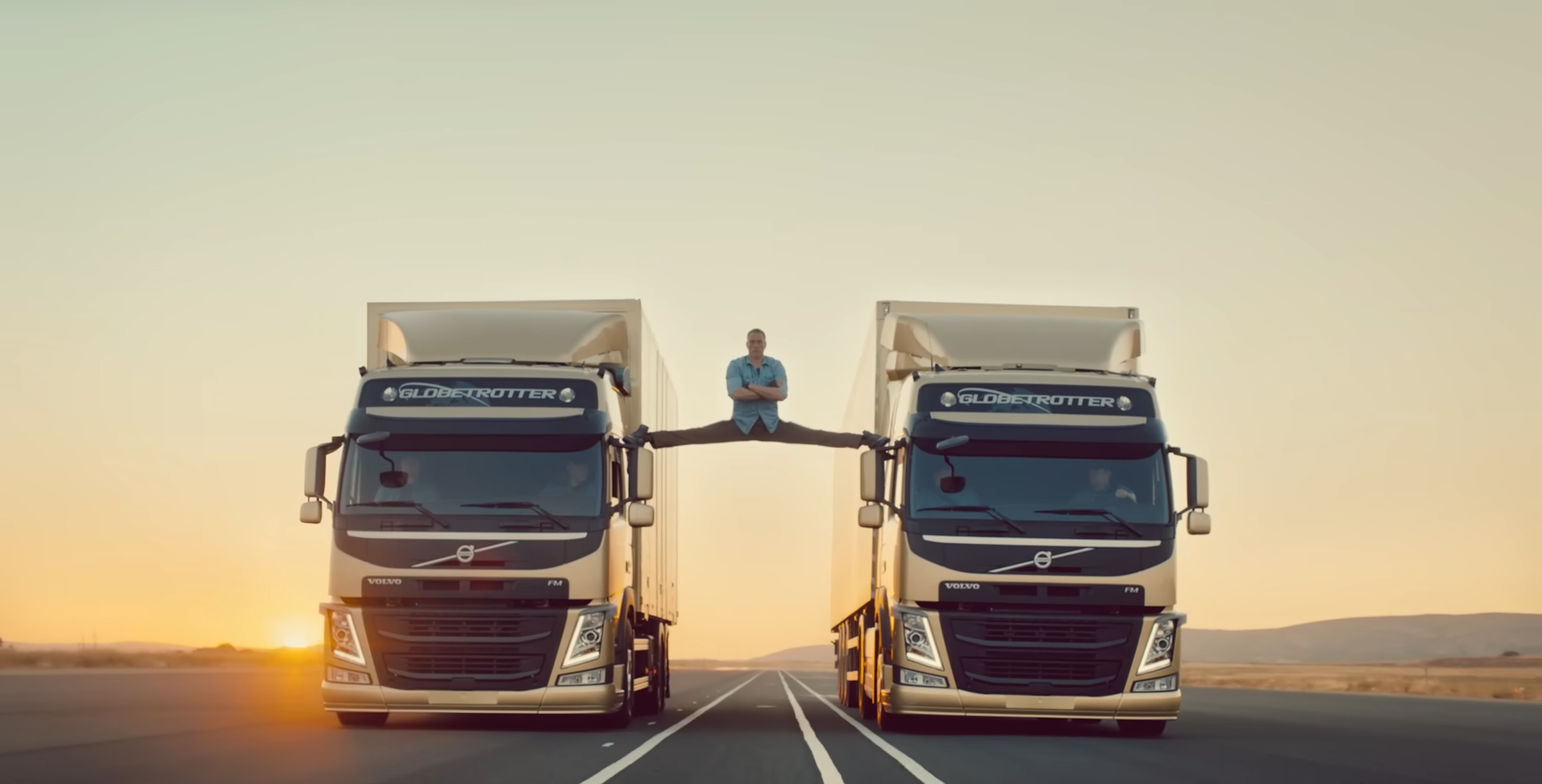
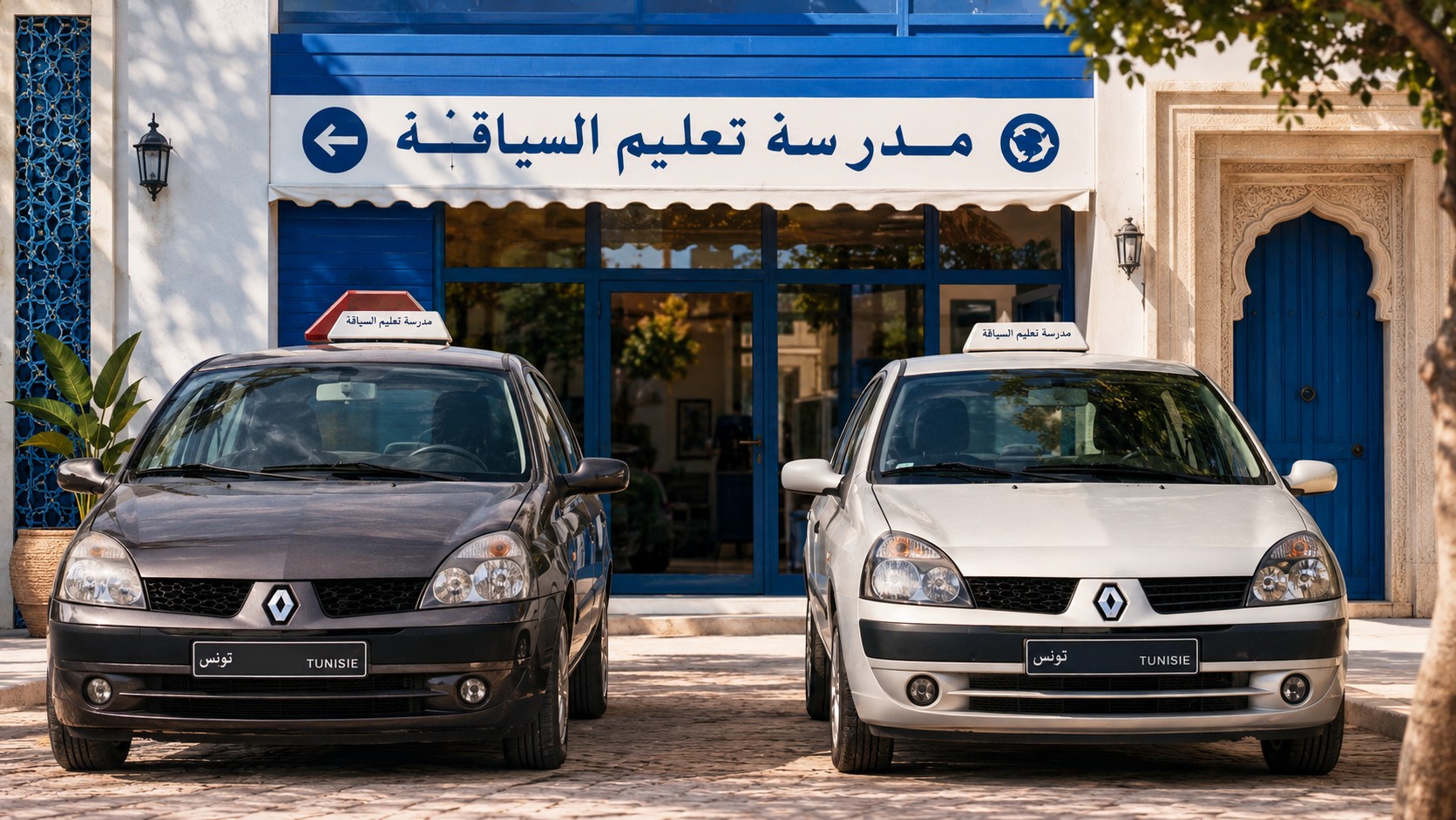
In Tunisia, the "heavy goods vehicle licence" refers to categories C and C+E, reserved for vehicles over 3 500 kg used to transport goods. Unlike the category B licence, it is never obtained as a first licence. It is a professional step, intended for drivers who already have experience, and it opens the way to the job of lorry driver, in Tunisia and, increasingly, abroad. Here is the essential information to know.
Categories C and C+E: what sets them apart
Category C licence: rigid lorries (gross vehicle weight above 3 500 kg, with the possibility of towing a trailer of up to 750 kg). Minimum age: 20 years old. Prerequisite: having held the category B licence for at least 2 years.
Category C+E licence: articulated combinations and semi-trailers (a category C tractor unit coupled to a trailer with a gross vehicle weight of more than 750 kg). Minimum age: 21 years old. Same prerequisite: category B licence held for at least 2 years. The category C licence is not required beforehand, but the C+E automatically includes its entitlements.
💡Validity period (for both categories): 3 years up to the age of 60, 2 years between the ages of 60 and 76, then annual renewal beyond that.
How to obtain it: the key stages
- Check that you are eligible: be of the required age, have held the category B licence for 2 years and obtain a certificate of fitness from an approved doctor.
- Submit your application to the ATTT, online or at a regional directorate. The application is valid for one year and allows you to take both parts of the test at a single test centre.
- Pass the theory test (the driving theory test).
- Pass the practical test.
- Collect your licence once it has been issued by the ATTT.
The practical test takes place in two separate parts. The first is the on-road driving test, which generally lasts between 15 and 20 minutes. The candidate drives in real traffic conditions, in built-up areas and, where the route allows, on open roads or motorways. The examiner assesses in particular the candidate's behaviour at the wheel, observance of priority rules, handling of junctions and adaptation of speed.
The second part is devoted to manoeuvres. It takes place away from traffic, in a specially laid-out area. The candidate must carry out several precision exercises, such as reversing between obstacles or parking in a bay or at a loading dock. For the category C+E licence, an additional exercise consists of coupling and then uncoupling the trailer. This exercise requires a methodical approach and good technical control. As with the rest of the test, each mistake is assessed according to its seriousness, with a distinction between technical faults and faults that result in failure.
From the category B licence to heavy goods vehicles: a completely different way of driving
Moving from a car to a lorry is not simply an administrative formality. It is a genuine change in the way you drive. Braking distances are longer, there are more blind spots and the turning circle means you have to anticipate bends much earlier. The higher driving position also changes how you perceive the road.
For these reasons, practical training for categories C and C+E is generally longer than for the category B licence. The choice of driving instructor is also particularly important. It is better to be trained by an instructor experienced in driving heavy goods vehicles, able to pass on the right reflexes, which are very different from those acquired behind the wheel of a car.
Heavy goods vehicle training in Tunisia: choosing your driving school with Drivago
The administrative fees (enrolment, tests and issuing of the licence) remain relatively low. The largest part of the cost depends on the driving school you choose, heavy goods vehicle training naturally being more expensive than training for the category B licence because of the vehicles used and the fuel. Not all driving schools offer these categories, so it is important to compare them before enrolling. Platforms such as Drivago make it easier to find suitable driving schools and to avoid unpleasant surprises.
The licence allows you to drive a heavy goods vehicle, but employers often look for additional skills. Training in load securing and restraint, in regulations on weights and dimensions, or ADR certification for the transport of dangerous goods, can make the difference during recruitment.
Specialised centres, such as the one in Borj Cédria, offer a complete professionally recognised lorry driver training course. This type of course provides practical skills that go beyond obtaining the licence and represents a real advantage on the job market, in Tunisia as well as abroad.
Why demand is growing
In Tunisia, road transport remains at the heart of national logistics, linking the ports of Radès, Sfax and Bizerte to the industrial zones. The sector continues to recruit, supported by the infrastructure projects under way, in particular the future deep-water port at Enfidha, as well as by constant demand for qualified drivers.
Internationally: increasingly attractive prospects
Nearly two thirds of young Tunisians aged 18 to 35 say they are considering leaving the country for better professional opportunities (Afrobarometer, 2026). For an occupation as sought-after as that of lorry driver, this trend opens up real prospects.
At the beginning of 2026, the International Road Transport Union (IRU) estimated the number of vacant driver positions worldwide at nearly 3 million, including more than 500 000 in Europe. This shortfall is expected to widen further with the many retirements anticipated by 2030. Faced with this shortage, several countries have eased their recruitment conditions. Germany, for example, issues a work visa to foreign professional drivers holding categories C or C+E, even without an officially recognised vocational qualification. Salaries reflect this strong demand: a driver starting out earns around 2 000 euros gross per month in France, compared with a salary generally between 800 and 2 000 dinars in Tunisia for a similar position.
This momentum is also reflected in official initiatives. In January 2025, a framework agreement was signed between ANETI, the Tunisian Vocational Training Agency and the French Office for Immigration and Integration, with support from the European Union, in order to facilitate the legal mobility of young Tunisians towards transport and logistics occupations in France.
In early 2026, ANETI also relayed an offer from an Italian company looking for driver-storekeepers holding a C+E licence. The position offered an annual gross salary of around 26 280 euros, with accommodation covered during the first year. For many candidates, the C+E licence today represents far more than a simple administrative document: it is a genuine asset for accessing professional opportunities in Tunisia as well as abroad.
In summary
Obtaining a heavy goods vehicle driving licence in Tunisia requires preparation: two years of holding a category B licence, a complete application file and demanding technical training. This investment can nevertheless open the door to many opportunities, both on the Tunisian market and internationally. The first step is to find a driving school that genuinely offers this training.
What is the difference between the category C licence and the category C+E licence?
The category C licence allows you to drive a lorry of more than 3,5 tonnes with a light trailer (up to 750 kg). The category C+E licence authorises driving articulated combinations and semi-trailers with a trailer of more than 750 kg.
Can you take the heavy goods vehicle licence without holding a category B licence?
No. In Tunisia, you must have held the category B licence for at least two years in order to enrol for the category C or C+E licence. You must also meet the minimum age requirement and be declared fit to drive by an approved doctor.
Does the heavy goods vehicle licence make it possible to work abroad?
Yes, it can open up many professional opportunities. Several countries are actively looking for qualified lorry drivers, particularly in Europe. Depending on the position and the country, however, additional training or administrative procedures may be required.