Choosing a driving school is probably one of the most important decisions in your journey towards the driving licence. Yet many learner drivers make this decision quickly, often based solely on price or proximity.
In reality, the choice of driving school can have a direct impact on the final cost of your licence.
Today, an hour of driving lessons generally costs between 25 DT and 33 DT. On top of that come the fees linked to the various stages of the test. The on-road driving test costs 200 DT, the manoeuvring test also costs 200 DT, and each failure means having to pay again for another attempt.
In other words, when you choose a driving school, you are not only choosing a place to learn how to drive. You are also choosing the people who will influence the number of hours you will pay for, your level of preparation and your chances of passing the tests first time.
The question therefore deserves serious thought.
Reputation: the first indicator of trust
When looking for the best driving school in Tunisia, reputation often remains the most reliable starting point.
Before enrolling, try to talk to former learners. Ask your friends, your colleagues or people around you how their experience went. Were they well supported? Were the instructors patient? Were the timetables respected?
Online reviews can also be useful, especially when they are numerous and detailed.
A good reputation does not guarantee a perfect experience, but it is often a sign that a driving school has managed to satisfy its learners over the long term.
Modern teaching methods often make the difference
Not all driving schools teach the road rules in the same way.
Some continue to work only with traditional methods. Others invest in more modern tools: revision platforms, online exercises, digital progress tracking or solutions allowing learners to work on the driving theory from their phone or computer.
This type of initiative generally shows that the driving school is seeking to improve the experience of its learner drivers and to offer them more flexibility.
Today, the quality of training no longer depends solely on the instructor. It also depends on the tools made available to learn more effectively.
The quality of the cars: an often underestimated criterion
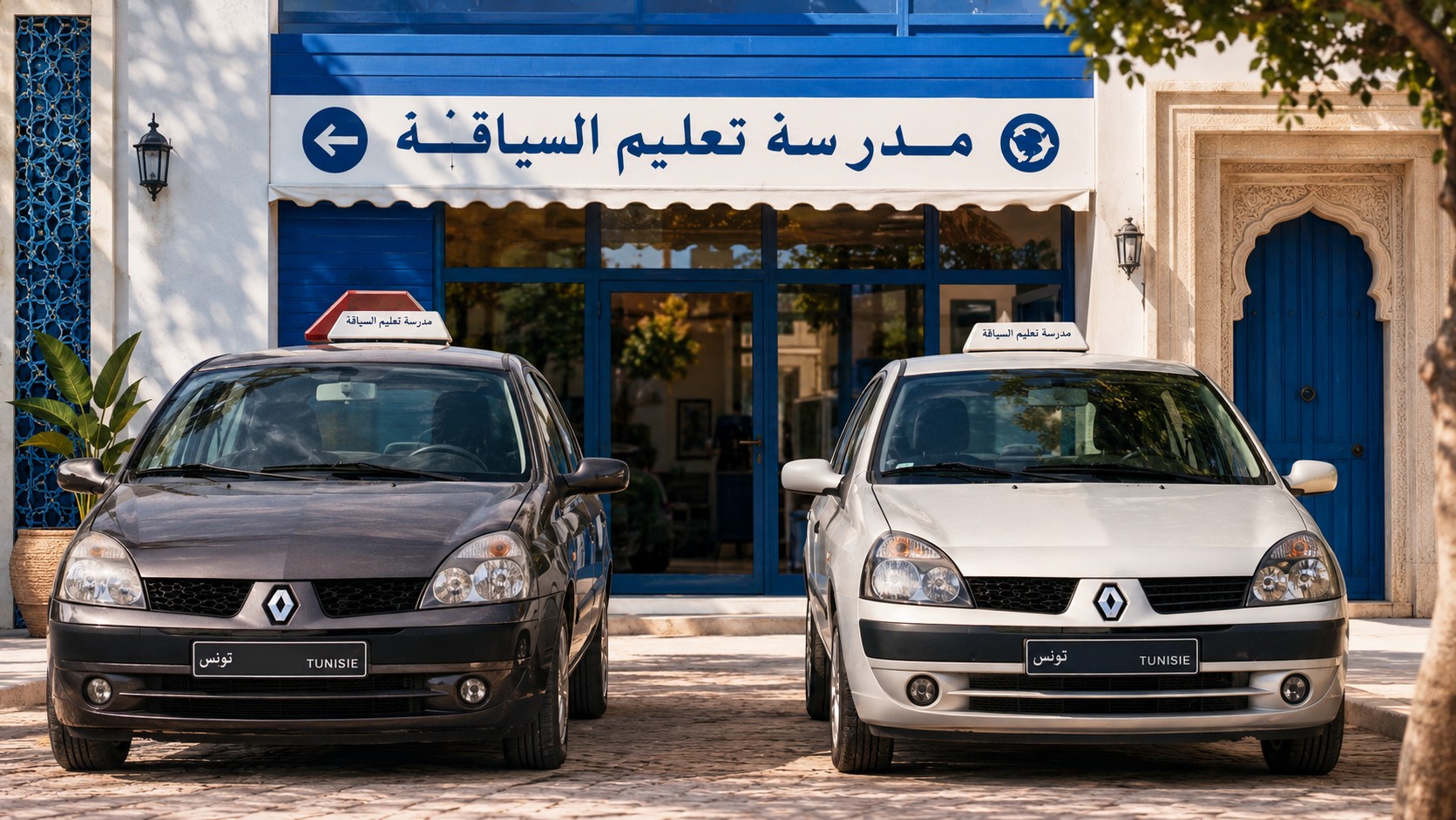
In your search for the best driving school for you, it can be very useful to look at the quality of the vehicles used for training.
Clean, well-maintained cars in good condition play an important role in the learning experience. They generally give an impression of seriousness, integrity and professionalism. A driving school that takes care of its vehicles often shows that it also takes the quality of the training it offers seriously.
It can also be worth choosing a driving school that offers a car similar to the one you plan to drive after obtaining your licence. A similar size, comparable power and driving sensations close to those of your future car can help you gain confidence during training, but also after the test.
Conversely, an old or poorly maintained vehicle can become a real handicap. Irregular acceleration, a worn clutch, gears that are hard to shift or brakes that are not very reassuring can take a candidate by surprise on test day and throw them off balance. This is particularly noticeable during the on-road driving test and above all the manoeuvring test, where precision and control of the vehicle are essential.
When you consider that failing the test can cost 200 DT for the driving test and 200 DT for the manoeuvring test, choosing a driving school with reliable vehicles is not a detail: it is sometimes a genuine investment in your chances of success.
Flexibility and organisation must match your needs
Every learner driver has a different schedule. Some are students, others work full time, and everyone progresses at their own pace. That is why it is important to choose a driving school able to adapt to your constraints.
Find out about the availability of time slots, the possibility of taking lessons outside working or study hours, as well as the average time needed to complete the training. If your goal is to obtain your licence within a specific timeframe, for example in 3-4 months, make sure the driving school has the organisational capacity needed to support you at that pace. Digital tools can also be an advantage, particularly for driving theory preparation, by offering more flexibility and better progress tracking.
The instructor's teaching approach is essential
A good driving instructor knows how to adapt their explanations to the learner's pace, to correct constructively and to create a climate of trust.
An impatient or overly critical instructor undermines confidence. Driving is best learnt in a reassuring environment.
The instructor's human qualities matter as much as their skills
Favour an instructor who wants to teach you to drive, not just to pass the test.
This is probably the hardest criterion to measure before enrolling.
Yet it is often the one former learners talk about the most.
A good instructor does not simply explain how to drive. They genuinely want their learner drivers to succeed.
This sometimes shows in small gestures that appear in no contract: picking a learner up near their home, letting them drive a little longer when an interesting situation arises, or taking the time to go back over a point that is causing difficulty.
Sometimes an instructor may recommend a few extra hours. Some learners immediately see this as an additional expense. Yet in certain cases the advice is sincere and simply aims to avoid a failure that would cost far more.
Many learners also appreciate instructors who offer an hour or two just before the exam, whether the on-road driving test or the manoeuvring test, in order to restore the candidate's confidence and put them in the best possible conditions.
These details may seem minor. In reality, they often have a considerable impact on the overall experience and on the chances of success.
Price matters, but it must be consistent with what is offered
The price obviously remains an important factor when choosing a driving school. However, a particularly low rate should sometimes prompt you to ask more questions. A difference that seems minimal on paper can sometimes conceal shorter lessons, less personalised support or a lower quality of service.
Conversely, a driving school charging higher rates must be able to justify that difference through the quality of its teaching, the availability of its instructors, the condition of its vehicles or the tools it makes available. In the end, the best choice is not necessarily the cheapest, but the one offering the best value for money. A few dinars saved at the start can quickly be lost in extra hours or in failures at the test.
Individual needs also count: the example of female instructors
Beyond the quality of the training, some learners have personal needs or preferences that are important to take into account. Comfort and confidence play an essential role in learning to drive.
For example, some women, particularly in more conservative circles, may feel more at ease with a female instructor than with a male instructor. This preference is entirely legitimate and can help create a calmer and more effective learning environment.
What matters is being able to choose the support that suits you best. Thanks to Drivago, learners can view instructors' profiles and more easily find a female instructor matching their expectations, enabling them to complete their training in the best possible conditions.
How can you assess a driving school's reputation before enrolling?
By talking to former learners around you and by reading online reviews, especially when they are numerous and detailed.
Which modern tools set the best driving schools apart today?
Online revision platforms, digital progress tracking and solutions that allow you to work on the driving theory from your phone or computer.
Why is the quality of training vehicles important?
A poorly maintained vehicle (worn clutch, unreliable brakes) can unsettle the candidate during the test, particularly in the on-road driving and manoeuvring tests, which require precision and control.
How do I know whether a driving school fits my schedule?
By asking about the availability of time slots, the possibility of taking lessons outside working or study hours, and the average time needed to complete the training.
Can you choose a female instructor rather than a male one?
Yes, some learners feel more at ease with a female instructor; Drivago lets you view instructors' profiles to find the support that suits you best.